Knowledge Extraction from Textual Data
Project Overview
This project focuses on extracting valuable information related to Land Use and Land Cover in Africa from large volumes of scientific
documents using Natural Language Processing (NLP) techniques. The goal is to extract candidates for relevant segments, classify them, and finally
extract specific entities and analyze them. You can find the report here and the code
here.
PDF Conversion
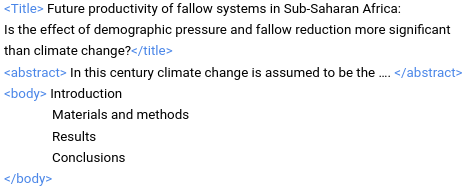
The first step is to transform the documents into text format. In our case, we are interested in the title, abstract, and body. To reduce noise,
we use GROBID, a pretrained model, to extract the text in a hierarchical way, converting it into an XML format.
Spliting sentences
For this segmentation, we utilized the Regular Expression library in Python (Regex), using sequences of periods followed by spaces as
delimiters.
Classification
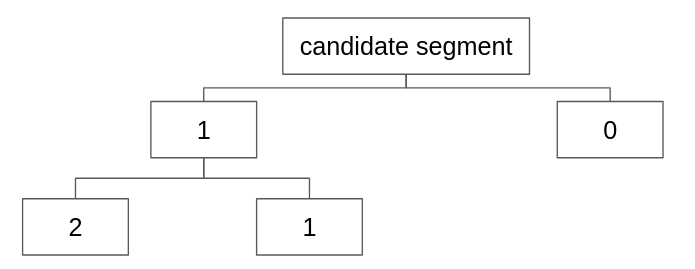
The dataset was manual labeled into 3 clases. To classify the unlabel dataset we used a schema by rounds and we try several models like SVM/Bag of Words and BERT.
Metrics
The project was focus in not lose information, so we were intersted in a good precision for class 0 because this was the one we were not interested at all,
and a good recall for class 1 and class 2.

Information Extraction
We used **Information Extraction (IE)** to convert unstructured text into a structured format for better analysis. A key technique
is **Named Entity Recognition (NER)**, which identifies and categorizes important entities related to LULC dynamics, such as measurements,
directions, dates, and locations. For NER implementation, we used the **SpaCy NLP library**, along with **Regex**
and **Entity Ruler**, to refine the extraction process and capture both quantitative and qualitative data essential for analyzing LULC
changes.